
Have you ever thought about how your favorite esports teams rise to greatness? Ladder formats kick things off by letting teams prove themselves in group rounds, then they shift to knockout playoffs where every win really matters. It’s kind of like leveling up in your favorite game, where each match gets you closer to that epic final round. In this article, we walk you through each step of the ladder format, revealing why it makes every game feel so intense and how it shapes the exciting path to victory.
esports ladder formats explained: Thrilling Climb Ahead
Ladder formats in esports are the systems that set up who plays who in a tournament. They group teams and create brackets where every match really matters. You see these formats in big events like Dota2 Majors and DreamHack CS:GO, where teams battle in quick, intense rounds.
At the start, teams compete in group stages. This might be a round robin or another easy-to-follow setup. It’s like a first round that filters out the teams, giving the strongest a boost for later rounds. Then, teams face off in match series where they must win a set number of games to move on. Think of it like volleyball or tennis, where each game can change everything.
The design of these ladder formats also includes clear bracket systems and a step-by-step road map for advancing. This setup makes it easy to follow who’s moving up and adds an extra dose of excitement.
- Group Stage Formats: Round robin or group-based seeding.
- Match Series Structure: Best-of series that decide the winner.
- Bracket Systems: Single or double elimination playoff formats.
- Progression Frameworks: Tiered rules guiding teams to the finals.
Key Components of Esports Ladder Formats: Structure and Stages
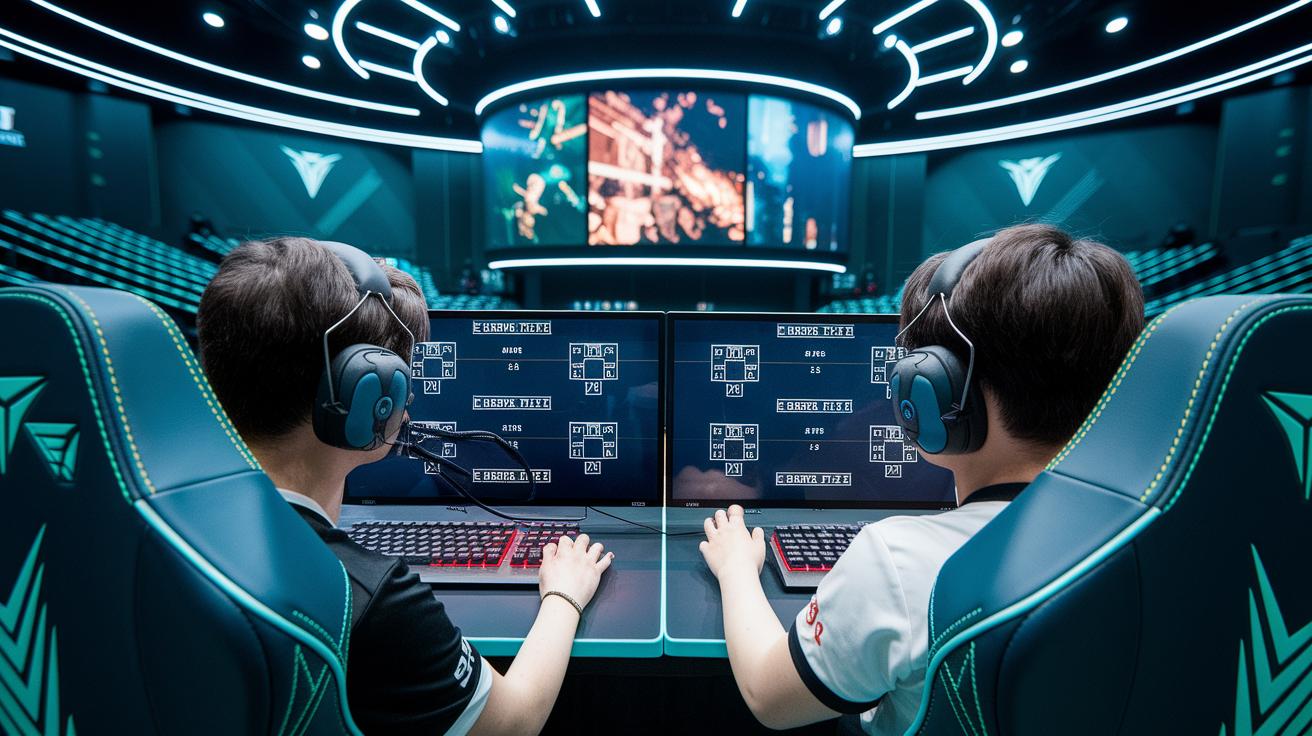
Esports ladders usually kick off with group stages that quickly show which teams are on the rise. These groups might use round robin, GSL, or Swiss formats with anywhere from 2 to 8 teams. In these early rounds, teams get ranked based on how they play, much like collecting initial game stats before the big showdown. It’s like a quick pre-match review that highlights who’s strong and where improvements can be made.
After the group stages, the competition gets even more intense. Teams move into playoff brackets where they face off in match series. In these rounds, the first team to hit a set number of wins keeps moving forward. This method, honed by many top tournaments, makes sure that only the most consistent teams progress.
| Element | Description |
|---|---|
| Group Stage Formats | Uses round robin, GSL, or Swiss to rank teams quickly |
| Match Series Dynamics | Teams battle until one secures the required wins |
| Seeding & Ranking | Early performance sets up competitive matchups later |
| Bracket Strategies | Single or double elimination helps guide tournament progression |
| Historical Progression Tactics | Lessons from past tournaments that boost strategic play |
In-Depth Analysis of Esports Ladder Structures
Esports tournaments have come a long way from simple head-to-head bouts. Back in the day, organizers used round robin formats so every team could have its shot. As time went on, the GSL method popped up to cut down the number of matches in groups of four. Then came the Swiss system, which pairs teams based on how well they’re doing in real time. Honestly, early organizers had a tough time balancing fairness with tight schedules, and they had to improvise as they went along.
Every tournament format has its own quirks. With round robin, you get a full view of every team’s skills, but scheduling can be a real pain. The GSL format, with its mini-brackets, gives teams fewer chances to bounce back from a loss. And the Swiss system, while exciting and flexible, can sometimes leave fans a bit confused by its pairings. These twists add depth to the game, showing how strategies evolve over time.
Modern tournaments blend these systems to match the event’s size and keep the audience engaged. Organizers tweak things like match series and stage breakdowns based on past experiences. In a Swiss round, for example, every new matchup feels like a restart, pushing teams to quickly learn from earlier mistakes and adapt.
| Ladder Type | Description | Pros/Cons |
|---|---|---|
| Round Robin | All teams play against each other, giving a full picture of performance. | Simple ranking, but it requires many games. |
| GSL System | Teams compete in groups of four with best-of-three series to advance. | Faster progress with fewer games, but less chance to recover from mistakes. |
| Swiss System | Teams are matched based on current performance, with fresh challenges each round. | Great for large tournaments, although pairings can get a bit tricky. |
Evaluating the Pros and Cons of Esports Ladder Formats

We took this part out to skip repeating details you already read. Every key point is now mixed into the full analysis above, so just head back up for the complete lowdown.
Implementing and Optimizing Ladder Formats in Esports Competitions
We've learned a lot about ladder formats, and now it's time to mix in some fresh insights from live tournaments. Picture this: in one event, when a top-seeded team suddenly lost early on, the organizers quickly reshuffled the seeding to keep the matchups fair and intense. It was like watching a sudden game twist that ramps up the thrill.
In these moments, quick adjustments really make a difference. If you’ve already checked out our earlier tips on planning match series and setting up seeding, you now see that being ready for live decisions can add a whole new level of excitement. Real tournament stories show that tweaking advancement rules during the game can help teams stay competitive even when surprises hit.
Here’s a quick guide to keep in your back pocket:
- Planning and Format Selection – Choose a format that fits your game’s pace and the size of the tournament.
- Seeding and Group Stage Set-Up – Organize groups so early matches stay competitive and fun.
- Execution of Match Series – Run the series as planned, but always be ready to make live adjustments.
- Post-Tournament Review and Adjustments – Look back at what worked and what didn’t, and use those insights to sharpen future events.
Final Words
In the action, we broke down esports ladder formats explained with a clear view of group stages, match series, bracket strategies, and progression frameworks. We compared competitive progression systems and weighed the pros and cons while sharing practical steps to put them into play. The insights are a handy guide for boosting gameplay and streaming quality. Keep these ideas in mind as you step into your next tournament with newfound confidence and a clear strategy.
FAQ
What are esports ladder and tournament formats?
The esports ladder and tournament formats refer to the methods used to organize competitive play, mixing group stages, elimination brackets, and match series to create an efficient competitive progression system.
What is a ladder tournament format and method in tournaments?
The ladder tournament format involves players or teams challenging each other in a stepwise design, where progress depends on winning head-to-head matches that move competitors upward within the bracket system.
Can you give an example of a ladder competition or tournament, such as in badminton?
The ladder competition example in badminton demonstrates a sequential challenge format where players face successive opponents, with each win helping them climb the rankings and improve their competitive standing.
What is the step ladder tournament format?
The step ladder tournament format features lower-ranked competitors playing first, with each winner advancing to challenge higher-ranked players, establishing a clear and engaging path to the finals.
What are the different types of tournament formats?
The different tournament formats include round robin, single elimination, double elimination, and ladder systems, all designed with unique benefits for structure, competitive balance, and efficient scheduling.
What are the different types of casting in esports?
The different types of casting in esports include play-by-play commentary, color commentary, studio analysis, and integrated statistics, each offering a unique way to enhance viewers’ understanding and enjoyment of the game.