
Ever thought your go-to esports stream might get even cooler? With the latest tech upgrades, watching your favorite game feels like you're right in the middle of the action. New encoding tools and cloud computing (that’s just a fancy way of saying your video loads fast even on a slow connection) make sure every thrilling moment shines through. And with fresh additions like VR and AR, the whole experience leaps to a brand-new level. In this post, we’ll dive into how these tech boosts are turning streaming into an interactive adventure for fans and players alike.
Key Advances in Esports Streaming Technology
Esports streaming has come a long way since the days of blurry webcam feeds. Now, you can catch every detail in full HD and 4K, running at over 60 frames per second. Imagine watching your favorite team in such clear detail that every intense moment feels like you're actually at the event.
We owe a lot of this progress to video encoding tools like H.264 and HEVC. In simple terms, these tools take raw footage and pack it into digital formats that look great even when internet speeds slow down. For huge tournaments with over 10,000 viewers, cloud computing swoops in to spread the load so the stream stays smooth no matter what.
Looking forward, new tech like VR and AR is set to change the game even more. VR streams can now give you a full 360-degree view of the arena, making you feel like part of the action. At the same time, AR adds real-time stats and player data right on your screen, which makes following the match even cooler. And with AI, machine learning, and super-fast 5G networks, things like bitrate adjustments are becoming almost instant, with delays shorter than 20 milliseconds. These advances are not just pushing esports broadcasting to new heights, they're also giving us immersive, interactive experiences like never before.
Low-Latency Strategies Transforming Competitive Gaming Streams

Competitive gaming is all about reacting fast. Pro players depend on delays under 100 milliseconds so they can pull off split-second moves. With such low lag, every action comes through almost immediately. Ever played a match where a tiny delay, like 90 ms, turned a win into a loss? Moments like that push teams to chase even quicker tech in esports.
Modern tech uses hardware acceleration with GPUs and FPGAs to cut encoding delays to less than 10 ms. This means signals are processed almost instantly. Plus, adaptive bitrate switching tweaks the video quality every few seconds to keep up with changing network conditions. It's like watching a chameleon change its colors, viewers get the best picture even when the network acts up.
Protocols like SRT and RIST add an extra layer of trust. They come with built-in packet recovery and real-time error fixes, adding less than 2% overhead. These speedy data channels are key for smooth gameplay, making sure every awesome play is shown in clear detail.
Scalable Network Infrastructures for Live Esports Events
Cloud tech is at the heart of today’s esports streaming. Remote GPU farms run whole gaming sessions, letting us break free from the limits of local hardware. This on-demand scalability means these systems can handle sudden viewership spikes without a hitch. When a tournament fires up and tens of thousands of fans tune in, the cloud makes sure every key moment gets broadcast smoothly. It's like having a flexible resource that grows and shrinks as needed, keeping the stream solid during even the most heart-pounding matches.
Global CDN nodes play a big role too. They store parts of the live stream close to the fans. With nodes in over 50 countries, data doesn’t have to travel far, which cuts down on buffering and lowers delay. Fans get to see the action in near real time. Think of it like a network of mini relay stations spread all over the world, delivering game highlights right to your screen almost instantly.
Decentralized and hybrid peer-to-peer networks teamed with central servers help spread the load evenly. Instead of funneling everything through one server, these systems balance the work between peers and big data centers. This approach cushions the effects of varying internet speeds, something that can affect many emerging markets. In the end, this setup forms a tough framework that can support massive live events without ever letting the streaming quality slip.
Immersive Viewing Innovations: VR, AR, and Interactive Overlays in Esports

VR is totally changing how we watch big tournaments. Imagine putting on a headset and feeling like you're right there with the players as every cool move unfolds around you. This tech cranks up the excitement and gives you a fresh view of the action, making every match feel super personal.
AR overlays add a neat extra layer by showing live stats, heat maps, and even shifting leaderboards right on the screen. Picture a nail-biting moment when the data updates instantly so you can see how each player is doing as the game heats up. It feels like having a live coach right there, helping you catch every detail.
Interactive overlays are all about making you part of the game. You can vote on the camera angle you want to watch, join quick polls during breaks, or even trigger special effects like revealing a power-up. For example, a message might pop up asking you, "Choose your angle now – see the play from a fresh view!" These clever features turn watching into an active and personalized experience. Plus, they support audio feeds in several languages, so fans from all over can catch every moment.
Performance-Optimized Media Delivery Techniques
Streaming today depends on smart video encoding that keeps every epic gaming moment smooth and crisp. H.264 has been the go-to for ages, but new codecs are stepping up the game. For instance, HEVC can cut your data use by about half compared to H.264, so you can still enjoy high-quality streams even if your internet trips up. And then there's AV1, which squeezes out roughly 30% more compression than HEVC without any extra fees. In short, these upgrades are key to delivering streams that are fast and reliable, keeping fans totally immersed in the action.
| Codec/Protocol | Compression Compared to H.264 | Typical Latency Impact |
|---|---|---|
| H.264 | Baseline | Standard |
| HEVC | About 50% less data | Low |
| AV1 | Roughly 30% better than HEVC | Very Low |
| SRT Protocol | N/A | Minimized with FEC/ARQ |
Adaptive bitrate methods are real game changers too. They adjust the stream quality every few seconds to keep things running smoothly, even when your connection is a bit wobbly. And with forward error correction and ARQ protocols handling small packet losses (around 1–3%), delays are kept to a minimum. Put it all together, and this blend of smart encoding and speedy bitrate tweaks means gamers and fans get the best stream possible, no matter what Internet throws their way.
Future-Proofing Esports Streams with AI, ML, and 5G
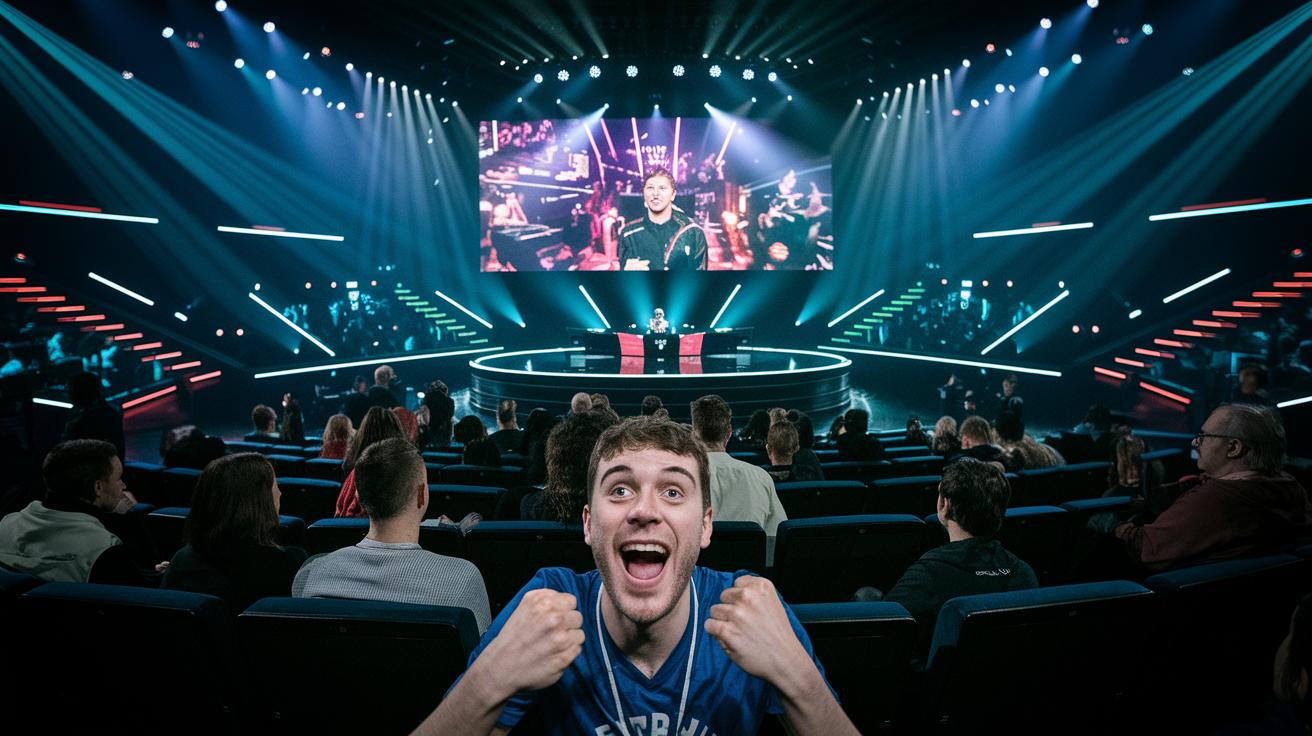
Imagine watching a live tournament where the stream instantly creates highlight reels just seconds after a big play. Thanks to AI and machine learning, the streaming experience now automatically tweaks quality and content on the fly. The tech even translates commentary into more than 10 languages in real time so that everyone feels part of the action. It’s like having a personal broadcaster who adjusts everything to give you the best viewing quality each time.
The game-changing features include:
- Automatic real-time highlight extraction
- Multi-language commentary translation
- Personalized camera-angle selection
- Dynamic contextual ad insertion
- Predictive stream quality adjustments
On top of that, edge computing partners with AI to ensure smooth performance. With the help of network-slicing in emerging 5G, dedicated paths deliver games with latencies under 10 milliseconds. This setup reduces jitter by roughly 30%, so regional viewers enjoy a much smoother stream. Experts even predict that by 2025, 5G will be in half of the global esports markets. This blend of smart computing and cutting-edge networks isn’t just keeping up with today’s needs, it’s gearing up for a future where viewer interactivity and immersive gameplay reach a whole new level.
Final Words
In the action, this post traced esports streaming’s evolution from crisp HD broadcasts to mind-blowing VR and AR experiences. We broke down key upgrades like rapid encoding, cloud scalability, and low-latency improvements that power competitive gameplay. Cloud infrastructures and adaptive bitrate shifts further cement the move toward smoother, more responsive streams. Wrapping up, we see AI, ML, and 5G setting the stage for even better viewer engagement. Embrace the future and the progress of how streaming technology is evolving for esports.
FAQ
How does technology impact esports?
The technology in esports transforms streaming by boosting video quality, reducing latency, and adding immersive features like VR and AR. Advanced encoding and cloud setups keep broadcasts reliable and engaging.
What gaming peripheral has been developed with esports in mind?
The gaming peripheral designed for esports is often a high-performance mouse. It offers low input lag, precise sensors, and ergonomic design to support fast, competitive play.