
Ever wonder if the old Xbox 360 models can still stand up to today's systems?
Each version has its own vibe, from the simple Original Core to the slick S model.
They added neat multimedia features and easy designs that changed how we play.
In this article, we break down every model, point out its cool features, and highlight the key differences so you can choose the one that fits your play style.
Ready to dive into how these consoles changed the game?
Xbox 360 Console Models: Clear and Exciting Insights
The Xbox 360 lineup has something for every gamer. Some consoles are for those just getting started, while others pack cool multimedia features for more dedicated players. The Original Core dropped on Nov 22, 2005. It was a basic system meant for simple gaming, and it came without an HDD or HDMI. At the same time, the Original Pro was also released, this time with a 20 GB HDD and component HD output to boost your gaming visuals.
By April 2007, the Elite model hit North American stores. This version had a matte black look, a 120 GB HDD, and even an HDMI port to sharpen your connection. Just a few months later, in September 2007, the Arcade model arrived as a fun, entry-level option. It came with 256 MB of built-in memory and a bundle of preloaded casual games to jumpstart your gameplay.
Then in July 2010, the S (Slim) model turned heads with a design that was 32% smaller. You could choose between several storage options, from a 4 GB flash to 250 GB or 320 GB HDD, and it also had built-in 802.11n Wi-Fi with cool touch buttons for easy media control. Finally, on June 10, 2013, the E model joined the mix with a modern look similar to the Xbox One, but with fewer ports and choices to store either 4 GB flash or a 500 GB HDD.
| Model | Release Date | Storage Options | Key Feature |
|---|---|---|---|
| Original Core | Nov 22 2005 | – | Entry-level, no HDD |
| Original Pro | Nov 22 2005 | 20 GB HDD | Component HD output |
| Elite | Apr 2007 | 120 GB HDD | HDMI port |
| Arcade | Sep 2007 | 256 MB | Bundled games |
| S (Slim) | Jul 2010 | 4 GB/250 GB/320 GB | Built-in Wi-Fi |
| E | Jun 10 2013 | 4 GB/500 GB | Xbox One-style design |
Design Evolution Across Xbox 360 Console Models
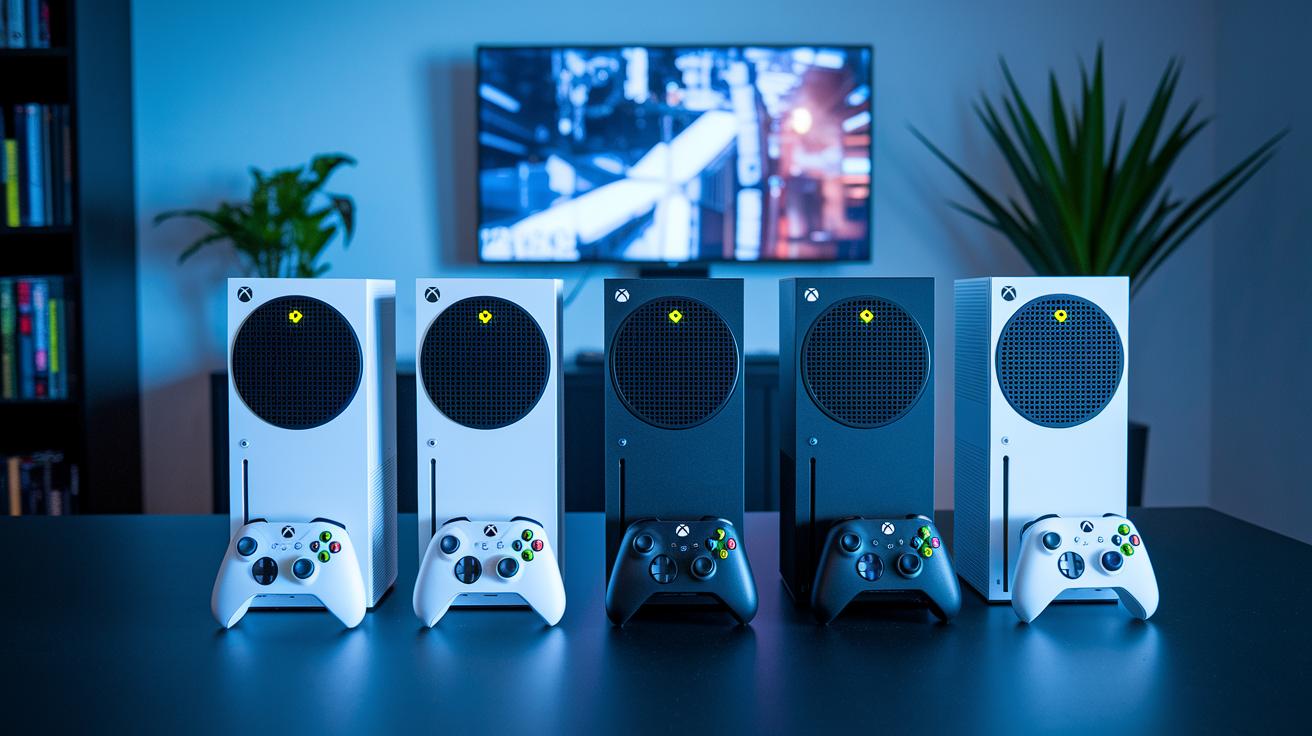
Original, Core, and Pro Models
Remember the first time you set up your Xbox 360? The Core and Pro models made a bold entrance with their chunky white or champagne-colored cases and that iconic, external brick power supply. It was as if the console announced, "Game on!" with its robust, larger-than-life design, a look that still sticks with gamers today.
Elite and Arcade Variants
Next up, the Elite and Arcade models stepped in with some cool updates. The Elite came in a sleek matte-black finish that felt premium and modern, plus it added handy features like a SATA HDD bay and an HDMI port. Meanwhile, the Arcade kept its white style but rearranged its ports, moving USB and AV connectors and even swapping the HDD for a memory card slot. It was like watching your favorite game level up with smarter, more efficient design tweaks.
Slim (S) and E Generation
Then came the Slim (S) model, which shrunk the console by 32% without losing its charm. It brought in touch-sensitive eject buttons, built-in 802.11n Wi-Fi, and a much quieter fan, making your gaming sessions all the more enjoyable. Later, the E generation built on that modern vibe with sharper, angular lines similar to the Xbox One. It featured hidden ports and a new power connector, all while saying goodbye to the old S-video port. This upgrade blended modern looks with improved functionality perfectly.
Technical Specification Analysis of Xbox 360 Console Models
Every Xbox 360 model is built on solid hardware that delivers thrilling gaming performance. All models share a 3-core, 3.2 GHz PowerPC CPU and a 500 MHz ATI Xenos GPU, meaning the heart of your gaming experience stays consistent. Yet, you’ll notice differences in memory, storage capacity, and power use that change your overall feel-of-play.
Back in the day, the original, Elite, and Arcade models rocked 512 MB of GDDR3 memory, which was plenty to keep games running smoothly. Later models, like the Slim and E, kept the same memory but added onboard flash storage to make managing apps and game data a bit easier. Storage options vary a lot. For example, the Elite model boasts a 120 GB HDD perfect for big media libraries, while the Arcade model only offers 256 MB of internal memory, keeping things light for casual play. The Slim model gives you the choice between a small 4 GB flash version and bigger HDDs (250 GB or 320 GB), and the E model ups the ante with either 4 GB flash or a 500 GB HDD.
Power consumption was also fine-tuned over time. The early systems pulled around 175 watts, while later models, like the E, drop to about 145 watts, meaning cooler, quieter sessions during those epic late-night gaming marathons.
| Specification | Details |
|---|---|
| CPU and GPU Frequencies | 3-core 3.2 GHz PowerPC CPU and ATI Xenos GPU at 500 MHz |
| System Memory | 512 MB GDDR3 in original, Elite, and Arcade; Slim/E add onboard flash |
| Storage Options | Elite: 120 GB HDD; Arcade: 256 MB; Slim: 4 GB flash/250 GB or 320 GB HDD; E: 4 GB flash or 500 GB HDD |
| Power Consumption | Original ~175 W, Elite ~160 W, Slim ~150 W, E ~145 W |
| Additional Onboard Flash | Included in Slim/E models for basic app and game data management |
For more details, check out xbox 360 tech specs – https://sololadder.com?p=1862
Performance and Reliability Across Xbox 360 Console Models
The first Xbox 360 had a big headache with what we now call the Red Ring of Death. Around 16% of these early models stopped working while still under warranty. Microsoft didn't sit back, though. They redesigned the graphics processor in the Elite refresh, which helped lower these hardware problems.
Then came the S model. Microsoft changed the console's layout so that air could move through it much better. This tweak brought the failure numbers down to less than 3%. The E model pushed those improvements even further with cooler, more efficient fins that meant fewer visits to the repair shop. One gamer even said, "My console finally runs without hiccups, almost like it was built for marathon sessions." Cool, right?
Loading speeds also got a sweet upgrade. The S and E models came with a sleeker hard drive that cut game load times by about 20% compared to the old external drive setup. Less waiting gives you more time to dive into your game. And players keep noting how much quieter and cooler these later models are. Picture getting ready for a big match and knowing your console will keep things running smoothly every time you hit the power button.
Xbox 360 Console Models Release Timeline
Every new Xbox 360 model brought fresh ideas that changed our gaming experience. The Original Core and Pro started it all on November 22, 2005, making gaming easier for everyone. Then in April 2007, the Elite rolled out with a sharper design and smoother performance that really clicked with players.
In September 2007, the Arcade version hit the scene. It kept the price low but still improved the experience, which helped build trust among fans. Next came the Slim, introduced at E3 in July 2010. Its compact, sleek look felt like a cool upgrade that many gamers loved. Finally, the E model made its debut at E3 on June 10, 2013, rounding out the line with design updates that hinted at future consoles.
Each launch not only upgraded the console’s tech but also sparked excitement among players. I remember when the Slim came out, its smaller size made setting up feel modern and easy, kind of like swapping an old desktop for a slick new laptop.
Production wrapped up in December 2016, closing a memorable chapter in gaming history with a legacy of hardware changes that made home gaming truly special.
Limited and Collector Editions of Xbox 360 Console Models
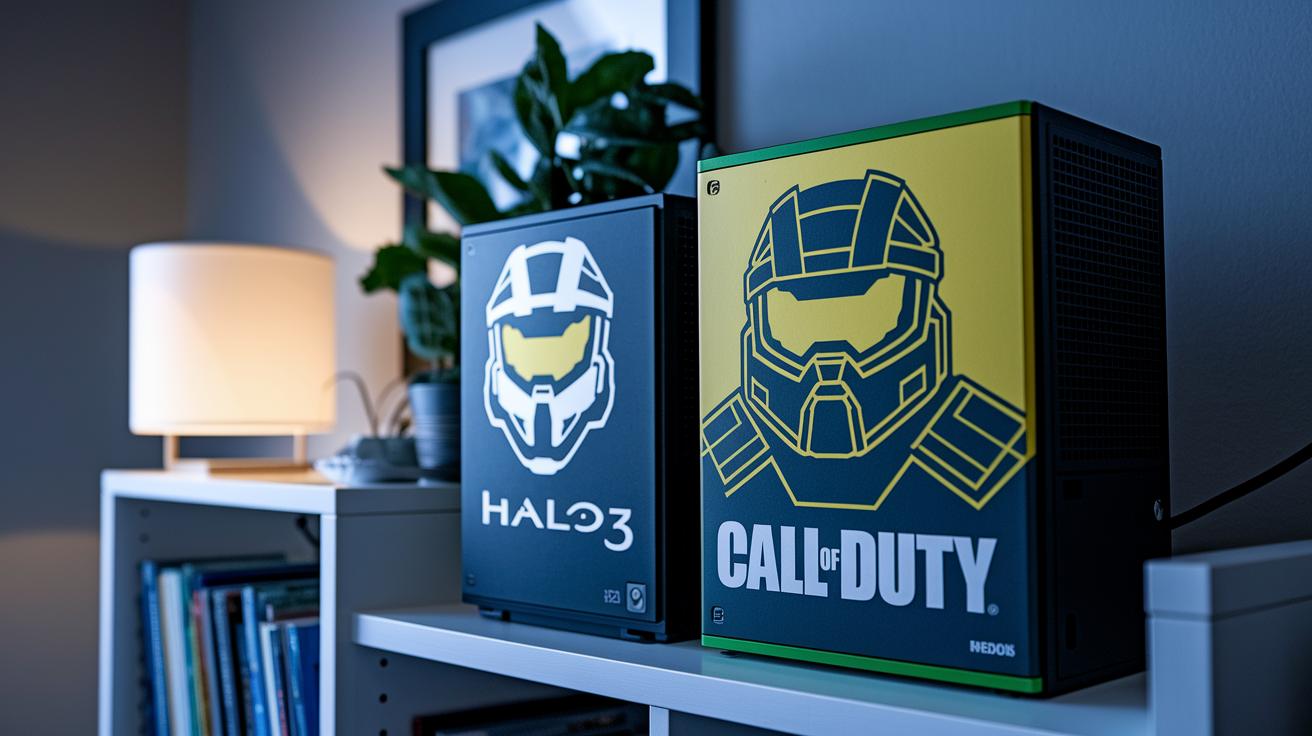
These special editions have always added a fun twist to the Xbox 360 world. They’re not just for playing games – they look cool and offer unique designs that catch the eye of both gamers and collectors. Imagine starting your console and feeling like you’re turning on a piece of art made just for you.
Take these examples for a spin:
• Halo 3 Special Edition (2007) comes with a bluish-silver panel and custom sounds that instantly set it apart.
• Call of Duty: Modern Warfare 2 (2009) shines with a camo finish and packs a 60 GB HDD, blending style and usefulness.
• Final Fantasy XIII Bundle (2010) features a crisp white console with a themed faceplate that captures the game’s epic feel.
• Gears of War 3 Limited (2011) rocks a bold crimson-red case with a 320 GB HDD, making it one of the standout releases.
Collectors even say the Halo edition can go for up to $500 on the resale market, showing just how special these consoles really are.
Accessory and Controller Integration with Xbox 360 Console Models
Every Xbox 360 lets you keep playing with the same wireless controllers and rechargeable battery packs. It’s like having your lucky charm with you every time, whether you switch from the Original to an S model.
The Original models need a separate Wi-Fi adapter, but the S and E models include built-in 802.11n Wi-Fi. This means fewer extra wires and a much simpler setup. The Kinect sensor uses a regular USB connection with the S and E, while the Original consoles need an extra adapter to hook it up.
Media remotes, chat pads, and external HDD kits work on all versions, so upgrading your accessories is super smooth. Also, power bricks vary a bit: the Original uses about 175 W, the Elite and Pro around 162 W, the S roughly 150 W, and the E has its own slim brick. This steady upgrade made it easier for everyone and turned the console into a real media hub.
Final Words
In the action, this guide spotlighted xbox 360 console models, comparing release dates, design shifts, and technical specs. We explored how each model, from Core to E, evolved in performance and reliability.
The article also broke down special editions and accessory setups, giving clear pointers for boosting gameplay and streaming quality. The breakdown helps simplify big choices for a smoother, competitive experience. Enjoy applying these insights, and may your next match be filled with wins!
FAQ
How many different types of Xbox 360 are there?
The Xbox 360 line includes multiple models—Core, Pro, Elite, Arcade, Slim, and E—that each offer unique design features and hardware options for various gaming needs.
How do I tell which Xbox 360 model I have?
The way you identify your Xbox 360 model is by checking its design, ports, and storage. For example, the Elite sports a matte-black finish with HDMI, while the Arcade has a simpler look with limited memory.
What is the rarest Xbox 360?
The rarest Xbox 360 is often a limited-edition release, like certain exclusive Halo-themed versions, which collectors prize for their unique designs and scarce availability.
What is the difference between the Xbox 360 S and E?
The difference between the Xbox 360 S and E is that the S features a compact design with touch controls and visible ports, while the E offers a sleeker, Xbox One–style design with hidden ports.
What are the defining aspects of the Xbox 360 Elite and Arcade?
The Xbox 360 Elite boasts a premium finish, larger HDD, and HDMI support, whereas the Arcade is an entry-level model with a white design, preloaded games, and minimal storage.
How does the Xbox 360 Pro differ from other models?
The Xbox 360 Pro stands out with its built-in 20GB HDD and component HD output, striking a balance between entry-level affordability and enhanced performance features.
What can you tell me about the Microsoft Xbox 360 and its legacy?
The Microsoft Xbox 360 is celebrated for its innovative design and diverse models. Its strong online service and unique features created a legacy that still influences modern gaming consoles.
How does the Xbox 360 compare to Microsoft Xbox Series and Xbox One models?
The Xbox 360 uses older hardware and technology compared to Xbox Series and Xbox One models, which deliver better graphics, faster processing, and smoother online experiences.
How does the Xbox 360 stack up against Sony PlayStation 3 and PlayStation 2?
The Xbox 360 offers robust online gaming and varied hardware options that set it apart, while the PlayStation 3 and PlayStation 2 provide different game libraries and performance characteristics.